It’s normal to expect cuts, blisters, or sores to heal on their own. With a some cleaning and attention the body will recover itself. However, if a wound doesn’t be healed after a period of four to six weeks, or if it becomes more redder, swollen bleeding fluid, or emitting a bad smell, that’s an indication there’s something more serious happening. Small sores can develop into a leg or foot wound that’s not healing. If not treated it could lead to serious complications, including Amputation.
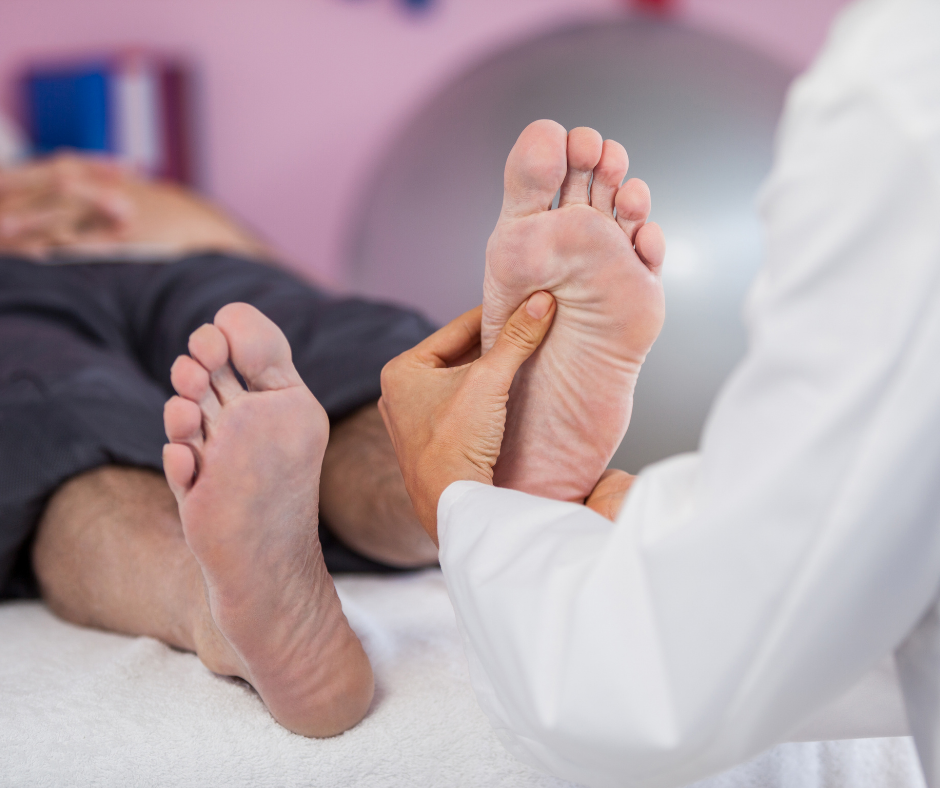
So if you’ve waited for an injury that won’t heal, it might be time to quit waiting and seek out help.
Why do some wounds not heal?
There are several common reasons why a wound won’t heal. Understanding the reasons will help you (and your doctor) figure out the best way to treat it.
If you’re diabetic the risk of developing foot and leg ulcers is very high. A high blood sugar level can harm nerves, which means you won’t experience any injuries. It also hinders blood flow and makes it difficult for small cuts to heal.
Another main reason is the lack of circulation, often linked to venous or arterial ulcers. Your blood can’t heal your skin if your veins or arterial arteries aren’t working correctly.
In addition, if you spend long periods of resting or lying down as a result due to mobility problems, you could develop pressure ulcers (bedsores) another kind of wound that is extremely stubborn if not dealt with appropriately.
Apart from age, other factors such as certain medications (such as blood thinners) and autoimmunity disorders, or a poor diet, can hinder healing. Sometimes it’s the combination all these elements that lead to an injury to not heal.
How long should healing take? And What If It Doesn’t?
It’s normal to ask how long healing “should” take. The truth is, it is contingent on the nature of wound as well as your overall health. A small cut or a blister can heal in only two weeks. A more serious foot ulcer or leg wounds that are not healing, could last up to 12 weeks.
Do not wait to seek professional wound treatment if you don’t see improvement in the next four to six weeks. It’s the time to see an expert on wound care. The longer a wound remains open, the higher the risk.
The right help is what You Deserve
If your sore won’t heal, it’s not just “bad luck” or something to ignore your body is trying to tell you it needs help. The positive side? There are treatments and experts that can really make a difference. Our clinic is specialized in the treatment of foot and leg injuries that don’t heal. We collaborate with other healthcare providers to develop plans to give your body the best chance of healing, and also to prevent an amputation.
There are many solutions that can be used, whether it’s advanced wound dressings or restoring blood flow. Also, there are special treatments such as hyperbaric oxygen. We’ll be with you at every step, because we believe that no one should ever need to face with a wound that doesn’t heal.
Final Thoughts
A wound that won’t heal is more than a physical issue. It impacts the entire life. But there’s possibility. Don’t hesitate to ask for help if you are tired of dealing an ulcer on your leg that does not heal or heal, or a sore that is persistent, or a foot injury that isn’t healing. If you get help as soon as possible the more quickly you’ll be able to return to the life you’ve always wanted without the continual discomfort and anxiety of a wound that isn’t healing.